
A simple guide to hyaluronic acid fillers treats the material as one standard, safe choice. This guide starts with the case that breaks that shortcut: a reader who is allergic to bacteria and has just learned how some of these fillers are made.
What the U.S. Food and Drug Administration says
The U.S. Food and Drug Administration names two details worth knowing before you settle on a material. The first concerns origin, because some dermal fillers contain hyaluronic acid material derived from bacterial fermentation, which matters if you are allergic to bacteria. The second concerns reversal. The agency says it may be difficult or impossible to remove the filler material, especially "permanent" fillers, or fillers that are not made of materials such as hyaluronic acid (HA).
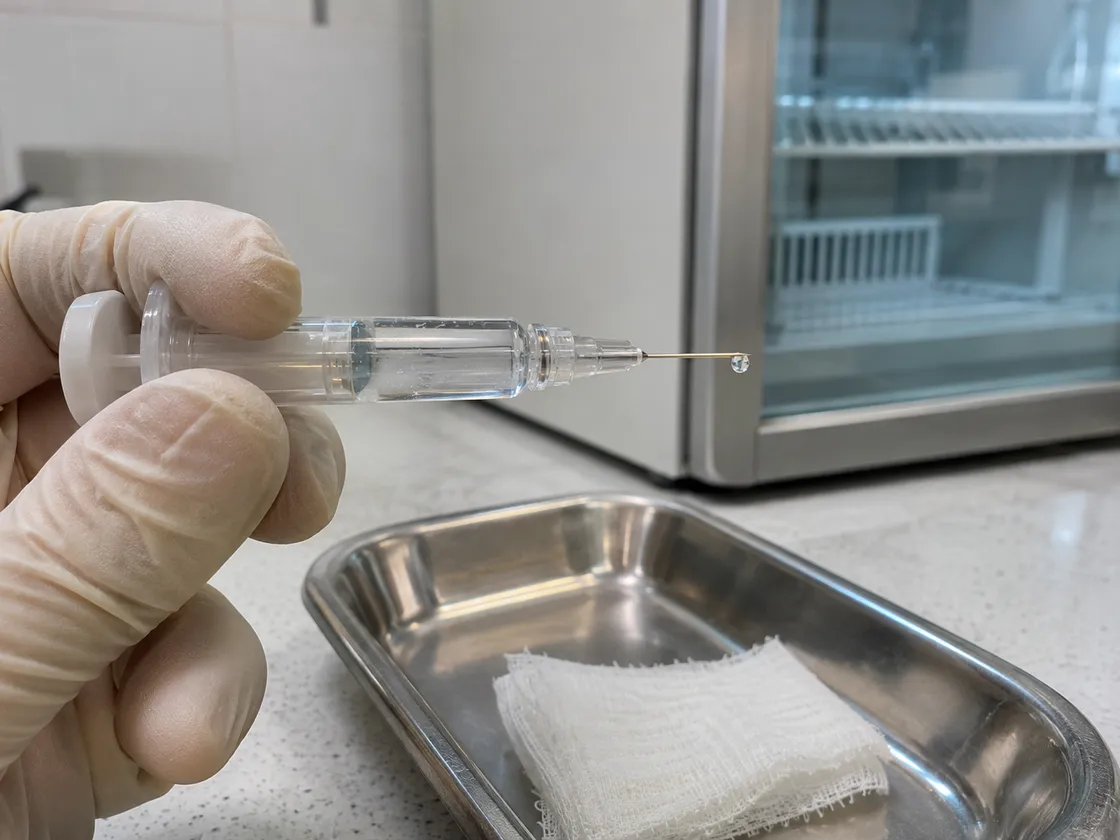
Both details come from the agency's page on dermal fillers.
Two constraints that pull in opposite directions
Read together, the details push against each other. The wording on removal sets hyaluronic acid apart from permanent fillers and from fillers made of other materials. The wording on origin says the same material can come from bacterial fermentation. A reader who wants the option to reverse a treatment and also has a bacterial allergy cannot settle the question with one rule. Each answer costs something on the other side.
The first practical step is learning exactly which product is being offered. The American Academy of Dermatology keeps a set of fillers FAQs for the general questions, so you can save the appointment for the specific ones.
Matching the allergy to the product
Whether your allergy rules out a particular product depends on how that product was made, and a clinician has to decide using your history and the product in hand. A PubMed Central article on injectable poly-L-lactic acid and hyaluronic acid places hyaluronic acid next to another injectable material, but a published article cannot rule on your individual case.
If you cannot identify what was injected in an earlier treatment, the American Society of Plastic Surgeons has an article on the long-term complications of unknown injectables. Our hub, Dermal Fillers for Lips, Cheeks and Lines, points to the related guides.
The question to bring to the appointment
Ask the provider to name the product, say what it is made from, and explain what removing it would involve. Mention the bacterial allergy before they choose the product, not after.